
Apple's latest step in the field of artificial intelligence, LiTo (Surface Light Field Tokenization), is setting a brand new standard in the world of 3D modeling. This innovative AI model, capable of producing high-quality and light-reflection-sensitive 3D objects from a single 2D photo, carries the potential to completely transform digital content production. Especially for game developers, e-commerce platforms, architectural visualization experts, and augmented reality (AR) designers, Apple LiTo stands out as a technology that pushes hardware boundaries. Today, the increasing need to rapidly migrate visual content into 3D environments enhances the importance of such intelligent systems day by day.
LiTo Technology
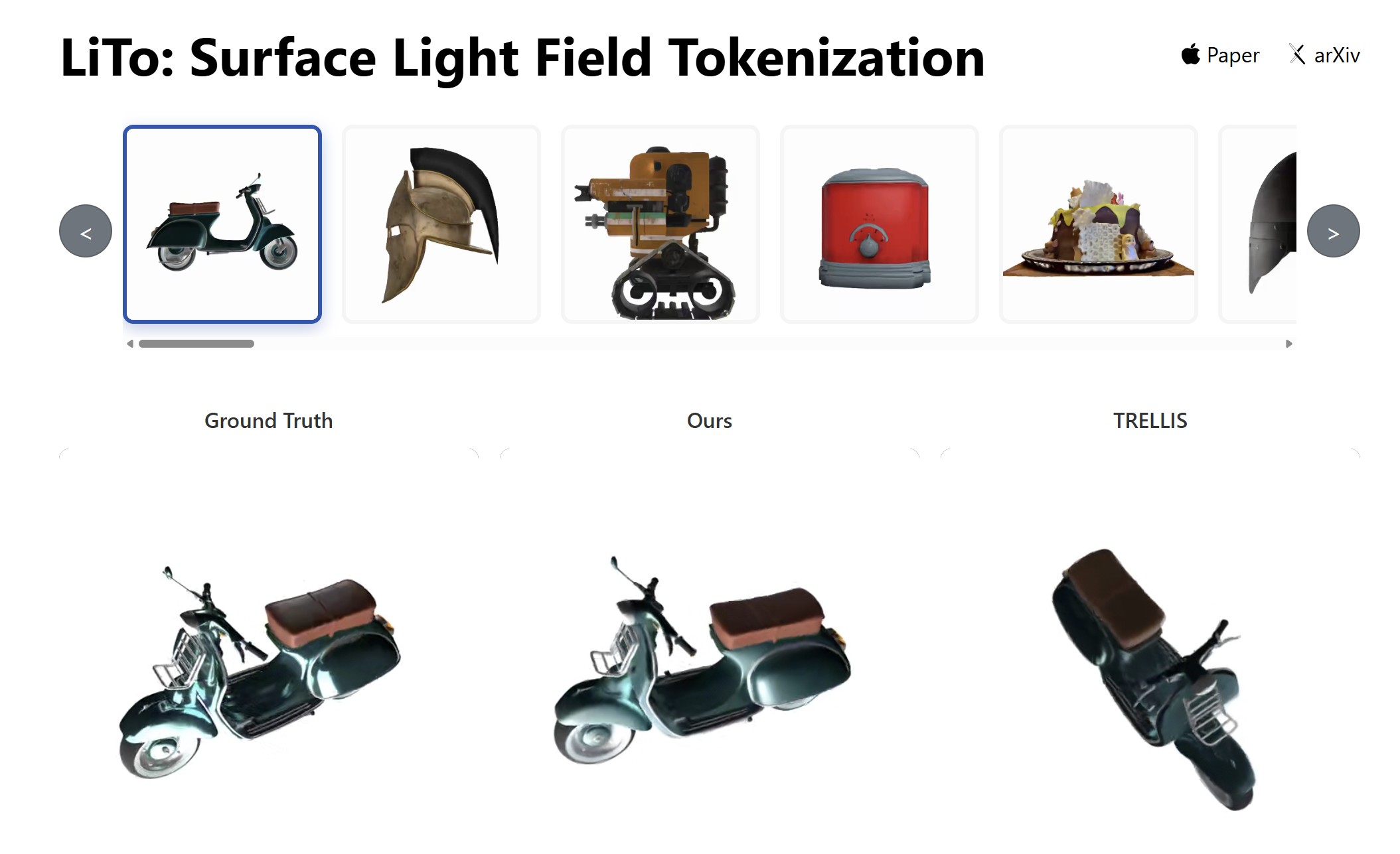
LiTo is a revolutionary 3D generation model introduced by Apple machine learning researchers at the ICLR 2026 conference. Standing for "Surface Light Field Tokenization," this system simultaneously calculates not only the physical geometry of objects but also how the light falling on them will appear from different angles. While traditional AI 3D tools generally focus only on the shape of the object or its light-independent matte (diffuse) appearance, the Apple LiTo model simulates complex lighting effects, such as metallic glints (specular highlights) and Fresnel reflections, with high accuracy.
Fundamental Differences from Traditional Models
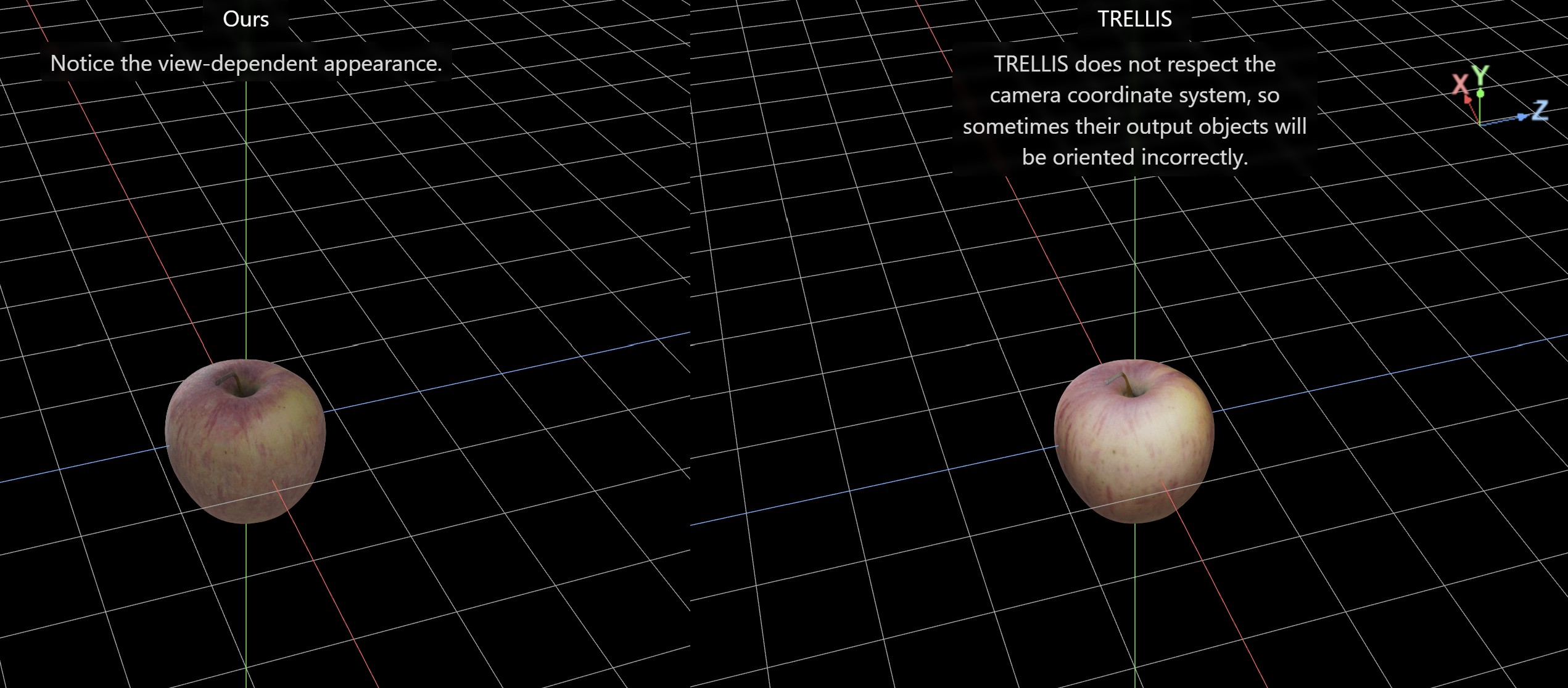
Other single-photo-to-3D AI systems on the market (e.g., TRELLIS) frequently tend to create incorrect orientations by miscalculating camera coordinates when transferring the object into 3D space. This new architecture developed by Apple comprehends the camera's position perfectly by taking a single input image as a reference. Consequently, the produced 3D assets significantly outperform previous methods in terms of both visual quality and fidelity to the original image.
Apple LiTo Working Principle and Architectural Structure
At the heart of the system lies an advanced latent space technology that processes visual data and light fields by compressing them. This complex mathematical process essentially consists of three complementary stages:
- Data Compression and Encoding (Encoder): The RGB-D (color and depth) image uploaded to the system as input is not left as a massive, difficult-to-process pile of data. Instead, it is transformed into a compact algorithmic code, namely latent vectors. In this sensitive stage, the AI deeply processes not only the physical boundaries of the object but also its material structure and interaction with light.
- Latent Flow Matching: The model uses a special machine learning technique to accurately complete missing angles and back surfaces in the image. By remaining completely faithful to the existing light, shadow, and material texture in the basic input photo provided to the system, it seamlessly brings to life the parts of the object not visible in the photo.
- Reconstruction and Output (Decoder): This compressed data is decoded in the final stage. The result is a full-fledged 3D model, ready for direct use in game engines or AR glasses, where light refractions and reflections change in real-time as one moves around it.
The Power Behind the AI Training Process
To train the LiTo AI model, Apple researchers used thousands of 3D objects specifically rendered from 150 different perspectives and under 3 different lighting conditions. Instead of loading all this data directly into the model, they enabled the system to learn by selecting random subsamples. This strategy allowed the model to operate much more efficiently and to grasp the logic of complex light plays rather than merely memorizing them.
New Areas of Use and Potential in the Digital World
This high level of fidelity achieved by single-photo-to-3D modeling technology has a structure that will directly accelerate traditional workflows in many different sectors. Game studios and independent developers will gain the opportunity to instantly transform 2D concept drawings into game-ready 3D assets that react dynamically to environmental light.
E-commerce sites will find the opportunity to turn a single product shot, taken by sellers in a standard studio environment, into photorealistic interactive models that customers can rotate 360 degrees and examine within seconds. Furthermore, mixed reality applications to be produced for advanced devices like the Apple Vision Pro will be supported by a much richer, optimized, and spatially aware visual infrastructure thanks to this system.
Apple, pivoting toward user-experience-oriented and high-quality solutions in the AI race, offers the smoothest way to transfer the physical world to the digital environment with the LiTo architecture. This system, which can understand the nature of light and material, eliminates technical barriers in 3D design processes and carries digital creativity to a whole new level.