
The artificial intelligence ecosystem left a brand new threshold behind with Claude Fable 5, announced by Anthropic on June 9, 2026. While the large language models (LLMs) released to date have generally focused on short text generation and basic question-answer loops, Fable 5 redefines industry standards by putting autonomous agent technology at the center. Beyond being a mere chatbot, this new model operates on a "digital engineer" infrastructure capable of making its own plans, writing code, and debugging.
Claude Fable 5 and Mythos 5 Architecture: Power Unveiled from Behind Closed Doors
To understand the core technical features of Fable 5, it is necessary to look at the next-generation Mythos infrastructure developed by Anthropic. Considering artificial intelligence safety and potential risks, the company released its hardware power through two separate branches. Claude Mythos 5 is a pure research model that contains no safety filters, accessible only to the US government and private cybersecurity institutions under Project Glasswing.
Claude Fable 5, on the other hand, is the public version of Mythos offered to the end-user, equipped with safety restrictions (guardrails). Both models share the same logical processing and "long-horizon" task execution capacity in their core architecture.
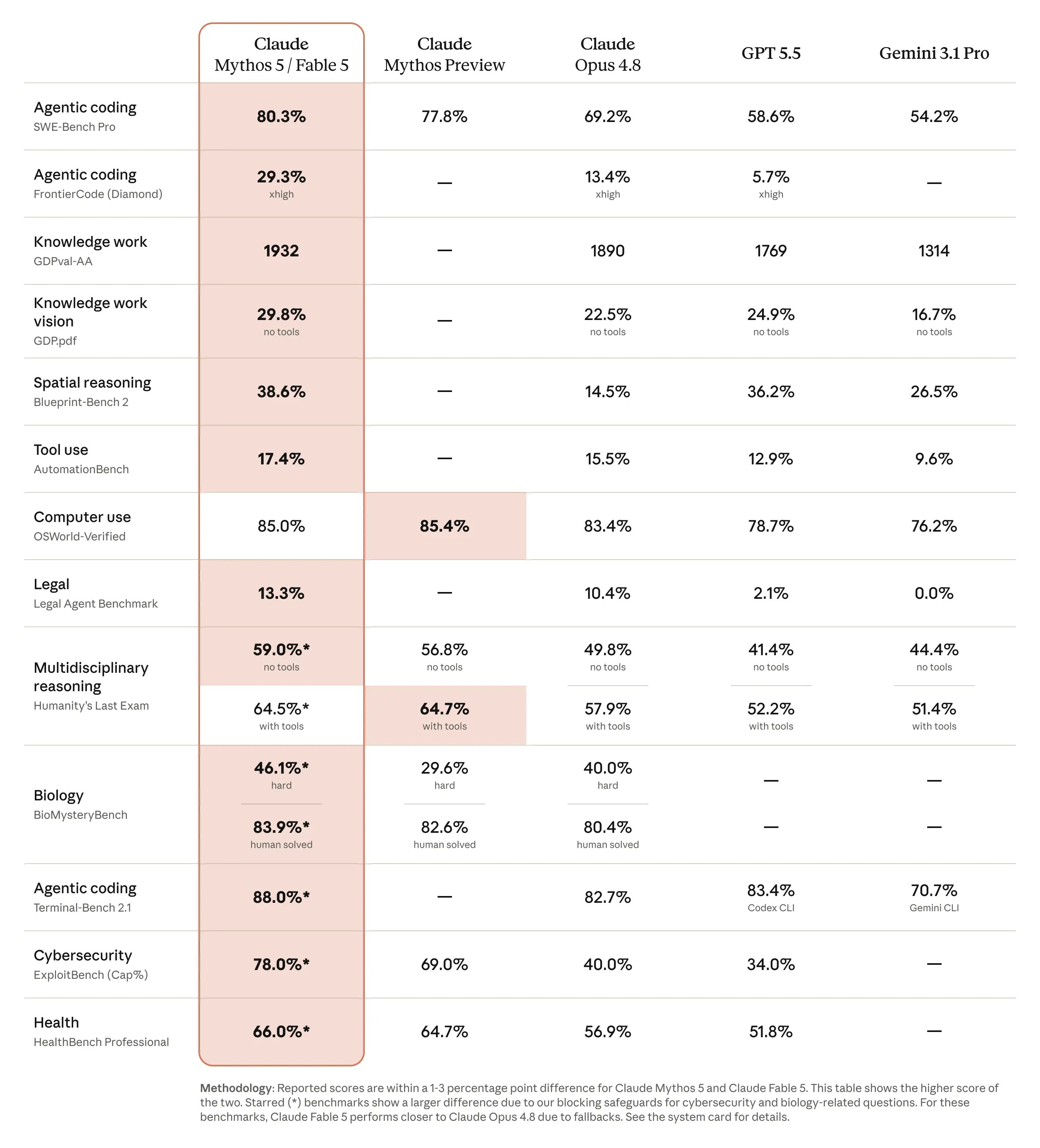
Prominent Technical Features
- Massive Context Window and Persistent Memory: Fable 5 offers a massive context capacity of 1 million tokens (approximately thousands of pages of documents). Furthermore, the persistent file-based memory architecture added to the model ensures that it remembers its past decisions and does not lose context in projects spanning months.
- Autonomous Sub-agent Generation: When receiving a complex command, instead of exhausting the system in a single processing block, it can create internally specialized sub-task agents. While writing a piece of code, it can run another logic loop through testing in the background.
- Advanced Vision Technology: It is currently the most capable system in screen reading and extracting data from pixels. By examining just a screenshot (raw pixel data), it can write the entire source code behind that page from scratch. sayfanın arkasındaki tüm kaynak kodunu sıfırdan yazabiliyor.
Safety Infrastructure: Routing Mechanism to Opus 4.8
Fable 5 follows a different path from classical refusal protocols when exposed to high-risk queries such as biological research, cybersecurity vulnerabilities, or chemical processes. To prevent the misuse of its powerful autonomous capabilities, Anthropic added a layer to the system called "Opus 4.8 Routing".
When a user makes a risky request, Fable 5 instantly intercepts the process and hands the query over to a sub-model, Claude Opus 4.8. The user receives the answer directly through the restricted and more stable Opus. According to Anthropic data, although this routing occurs in less than 5% of total sessions, the sensitivity of the system can sometimes trigger a fallback to the Opus model even for completely harmless queries (false-positives).
What Can Fable 5 Do? Striking Use Cases
The most important factor justifying Fable 5's high processing cost is its ability to work autonomously for days like a traditional software developer, assistant, or analyst. The capabilities of the model, which sits at the peak of the trend known as "vibe-coding" (natural language software development) in the industry, can be grouped under a few main headings:

Enterprise Software and Autonomous Game Development
- Massive Migration Processes: Fable 5 autonomously migrating Stripe's 50-million-line Ruby codebase in a single day, which would normally take months, is revolutionary in the enterprise space.
- Zero-Code Game Construction: Minecraft clones with a physics engine, state management, and multiplayer infrastructure can be built in seconds using only text commands. It can play and complete strategy games like Factorio and Slay the Spire over millions of tokens with zero human intervention.
Hardware Integration and Building Your Own JARVIS
- It has become possible for users to integrate hardware components into Fable 5 without writing a single line of code. Autonomous systems that manage 11 different screens simultaneously and read personal data, weather, and financial briefings as a voice assistant in the mornings can be easily set up.
Advanced Visual Analysis and 3D Generation
- The model's Vision capacity transcends text boundaries to intervene in the physical world. A rough schematic drawn on a napkin can be processed by Fable 5 and instantly transformed into a flawlessly measured CAD (Computer-Aided Design) model ready to be printed on 3D printers. Its ability to perform root-cause analyses by reading hundreds of pages of complex financial charts is the greatest indicator of the model's analytical power.
Although Fable 5's high cost and heavy limit consumption may initially seem discouraging to the end-user, reducing weeks of engineering and research hours to hours or even minutes completely alters the cost-benefit balance. The model's autonomous working ability transforms artificial intelligence from being a "tool" directly into a "workforce," opening the doors to an entirely new era in the worlds of software, finance, and engineering. zılım, finans ve mühendislik dünyasında tamamen yeni bir dönemin kapılarını aralıyor.
Access Dates, Pricing, and Limits
The cost created by this massive autonomous power on the hardware side is quite high. With the release of the model, Anthropic initiated a short trial period by granting access to Fable 5 for Pro, Max, Team, and Enterprise users.
This introductory period, where the model can be used completely free and flexibly, ends on June 22, 2026. From this date onwards, Fable 5 will be priced under extremely strict credit terms and limits:
- Input Cost: $10 per 1 million tokens.
- Output Cost: $50 per 1 million tokens.
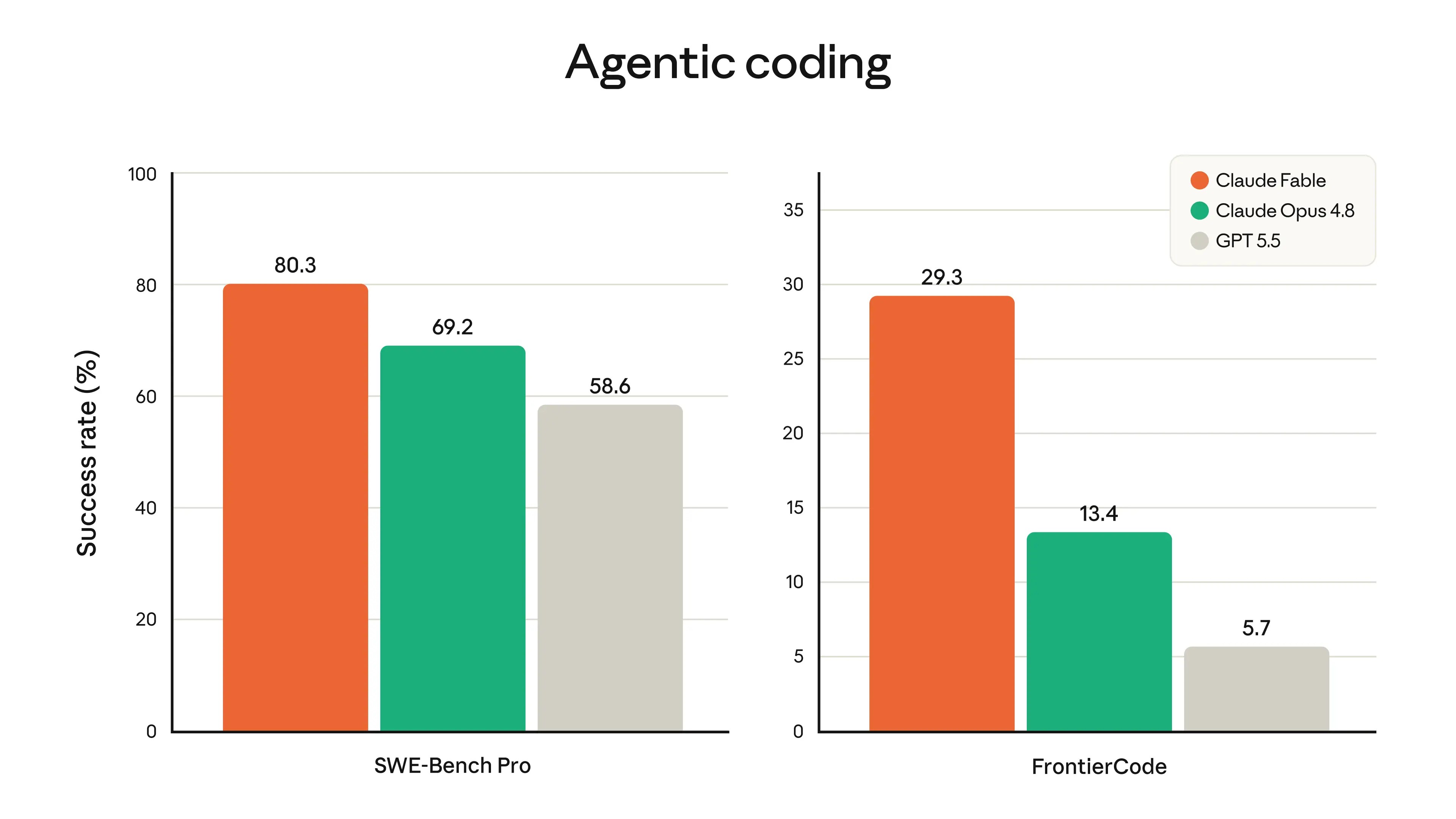
Because Fable 5 conducts self-reflection and verification processes in the background, it uses resources much more aggressively than standard models. So much so that it is reported that the model consumes user limits twice as fast compared to Opus 4.8.